Improve comfort with batt insulation in Roundup, MT. Learn about fiberglass, mineral wool, wall, attic, garage, and energy-efficient insulation options.
Why Batt Insulation Is Still a Practical Choice
Insulation plays a major role in how comfortably a home, shop, garage, or commercial building performs throughout the year. When wall cavities, ceilings, floors, or unfinished spaces lack enough insulation, conditioned air can escape more quickly and indoor temperatures can become harder to maintain. Batt insulation remains a practical option because it is designed to fit between standard framing members and can provide predictable thermal coverage when installed correctly.
Spray Pros Insulation provides spray foam, blow-in, and batt insulation for residential and commercial properties across Montana and Northern Wyoming. The company works with fiberglass and mineral wool batts for walls, ceilings, floors, garages, and other framed areas.
A strong insulation project starts with evaluating the building, choosing the appropriate material and thickness, and installing each batt without gaps, compression, or poorly fitted edges.
What Professional Batt Insulation Includes
Professional batt insulation services can support new construction, remodeling, garage upgrades, basements, walls, ceilings, and floors. The installation process typically begins with measuring framing cavities and checking the area for obstructions, moisture concerns, or conditions that could affect coverage.
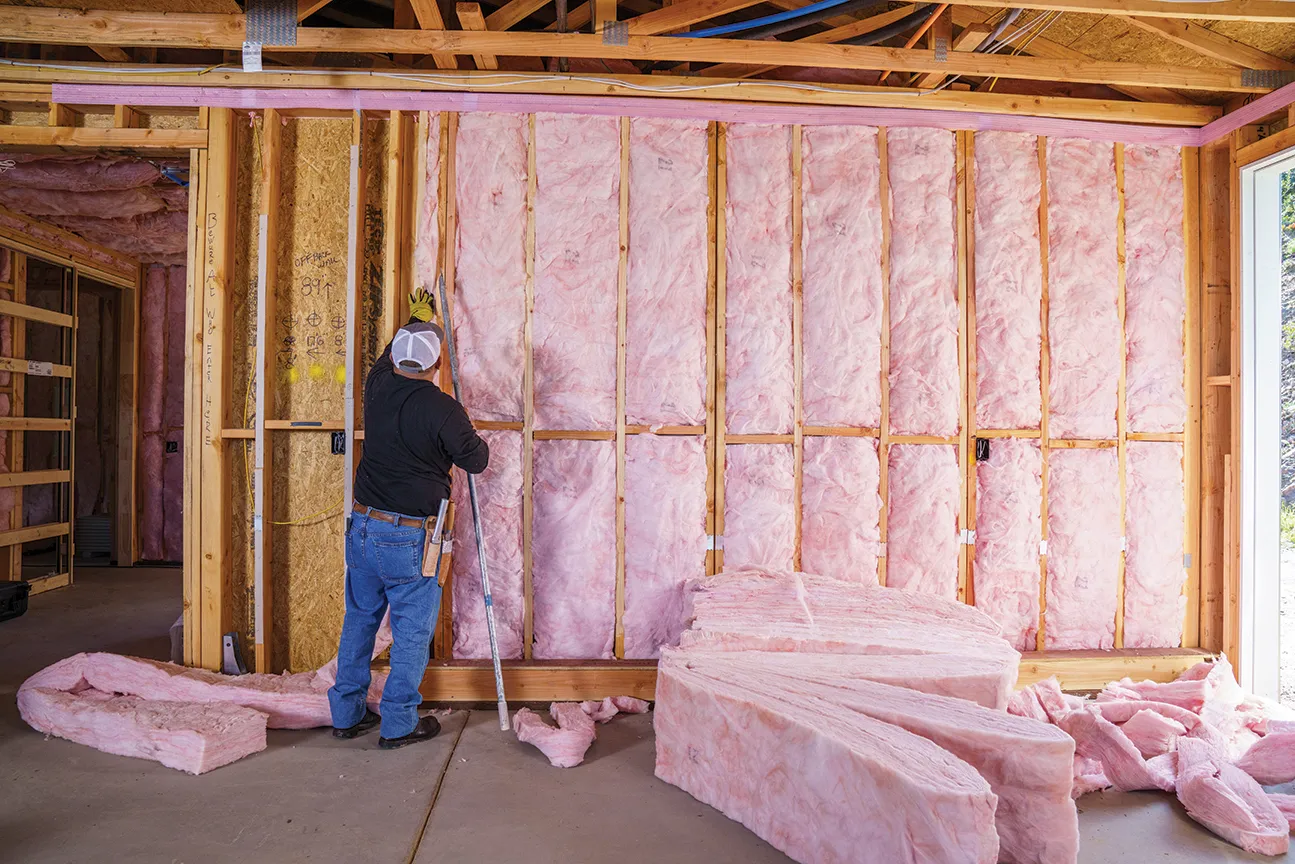
Batts are then cut and fitted around electrical boxes, wires, pipes, framing, and other penetrations. Proper installation matters because insulation performs best when it fills the intended cavity evenly while maintaining its designed thickness.
Common batt insulation materials include fiberglass and mineral wool. Each has different performance characteristics, cost considerations, density, sound-control qualities, and installation requirements. The best choice depends on where the insulation will be placed and what the property owner wants to improve.
Fiberglass Batt Insulation in Roundup, MT
Homeowners considering fiberglass batt insulation in Roundup, MT can use this material in many framed parts of a building, including walls, floors, ceilings, garages, and unfinished spaces.
Fiberglass batts are manufactured in common widths that correspond with typical framing layouts. This makes them a straightforward option for open wall cavities during new construction or remodeling. They can also be installed in accessible ceiling and floor assemblies where the framing remains exposed.
The quality of the fit is important. Gaps around edges, compressed sections, or loosely placed pieces can reduce the effectiveness of the completed insulation layer. Installers should cut material accurately rather than forcing oversized batts into cavities.
Property owners should also address visible moisture problems before adding new insulation because insulation should not be used to conceal active leaks or damp building materials.
Fiberglass and Mineral Wool: Understanding the Difference
Fiberglass and mineral wool are both available as batt products, but they are not identical.
Fiberglass is lightweight and widely used in residential construction. It is available in several thicknesses and R-values and can be installed in many standard wall, floor, and ceiling cavities.
Mineral wool is denser and often selected when sound reduction, fire resistance, or a firmer friction fit is important. Its density can make it useful between rooms, around mechanical areas, and in assemblies where additional acoustic control is desired.
Neither material should be chosen by name alone. Framing depth, required thermal resistance, budget, moisture conditions, sound-control goals, and the location of the assembly should guide the decision.
A professional installer can explain which option makes sense for each part of the property rather than using one material everywhere automatically.
Why Correct Batt Fit Matters
Batt insulation works by trapping air within the material, which slows heat transfer through the building assembly. When the insulation is heavily compressed, torn, folded, or installed with large gaps, its performance can suffer.
Every cavity should be treated as an individual space. Electrical wires may require a batt to be carefully split so insulation can sit behind and in front of the cable. Pipes, boxes, and framing details may require accurate cuts.
Small gaps repeated across many cavities can create weak areas in an otherwise well-insulated wall.
Installers should avoid stuffing leftover pieces into openings simply to make a cavity look full. The objective is consistent coverage at the appropriate thickness, not maximum material density.
Good workmanship becomes especially important before drywall is installed because corrections become more difficult after the wall is closed.
Wall Batt Insulation for Remodels and New Construction
Wall batt insulation is especially practical when wall framing is exposed. New construction provides direct access to the cavities, while major remodeling may expose walls that previously contained damaged or insufficient insulation.
Before installing batts, the wall should be checked for air leaks, moisture, damaged framing, and utility penetrations. Sealing appropriate gaps can complement the insulation by reducing uncontrolled air movement.
Batts should fit snugly between studs without buckling. Areas around windows, doors, electrical boxes, and plumbing should receive careful attention because irregular spaces can be easy to miss.
If existing walls are fully closed, batt insulation may not be the most practical retrofit method unless interior or exterior finishes are already being removed. Other insulation systems may be better suited to enclosed cavities.
Attic Batt Insulation and Thermal Coverage
Attic batt insulation can be installed between ceiling joists or in other accessible framed attic assemblies, depending on the building design.
Attics require careful planning because insulation must work alongside ventilation, electrical components, access pathways, and air sealing. Batts should not block required ventilation paths at eaves or cover equipment that requires clearance.
Homeowners may notice signs of inadequate attic insulation through uneven indoor temperatures, drafts, or rooms that become difficult to keep comfortable. These symptoms can have multiple causes, so inspection should come before adding material.
Existing insulation should also be evaluated. Wet, contaminated, badly compressed, or displaced material may require correction before new batts are installed.
The goal is to create continuous thermal coverage without interfering with the building systems that need to remain accessible and functional.
Energy-Efficient Insulation and Air Sealing
Energy-efficient insulation performs best when air leakage is addressed as part of the building envelope.
Insulation slows conductive heat transfer, while air sealing reduces uncontrolled movement through cracks and gaps. Common leakage points may appear around plumbing penetrations, electrical openings, framing joints, attic access areas, and other transitions.
Installing thick batts over significant air leaks does not necessarily solve the underlying draft problem. In accessible areas, appropriate sealing can be completed before insulation is placed.
This combined approach can create a more consistent thermal boundary.
Property owners should also understand that insulation performance depends on the complete assembly. Windows, doors, ductwork, HVAC performance, and building orientation can all affect indoor comfort. Batt insulation is one important component rather than a single solution for every energy concern.
Batt Insulation Installation in Shepherd, MT
Property owners considering batt insulation installation in Shepherd, MT can use batt products in new homes, remodels, garages, shops, ceilings, floors, and other framed spaces.
The first step should be identifying where additional thermal coverage will provide the most value. Some buildings have isolated weak areas, while others require a larger insulation plan.
An installer can review cavity dimensions, existing materials, accessibility, and whether fiberglass or mineral wool is better suited to the project. If walls are already open during remodeling, that can be an ideal opportunity to correct old insulation before finishes are replaced.
The finished work should provide consistent coverage, neat cuts around obstructions, and appropriate access around components that must remain serviceable.
Common Batt Insulation Installation Mistakes
Several installation mistakes can reduce the performance of batt insulation.
Common problems include:
- Leaving gaps along cavity edges
- Compressing batts behind drywall
- Folding insulation around obstacles
- Failing to cut around electrical boxes
- Ignoring narrow framing cavities
- Blocking ventilation paths
- Installing over active moisture problems
- Leaving sections displaced or unsupported
- Using the wrong thickness for the cavity
- Covering components that require clearance
These issues may appear minor individually, but repeated installation defects can create many weak points across a building.
Professional installation focuses on consistent coverage. Every unusual cavity, corner, penetration, and transition should receive the same attention as large, easy-to-fill sections.
When Existing Batt Insulation Should Be Replaced
Older batt insulation does not automatically need replacement simply because of age. Condition matters more than appearance alone.
Replacement may deserve consideration when insulation has been heavily compressed, displaced, contaminated, repeatedly wet, damaged by pests, or removed during remodeling.
If moisture has affected insulation, the source of the water should be identified first. Installing fresh material without repairing the leak can allow the problem to return.
Homeowners should also evaluate whether the existing insulation provides enough coverage for the goals of the project. In some cases, additional insulation may be possible without removing all existing material.
A professional assessment can help distinguish between material that remains useful and sections that should be corrected or replaced.
Before work begins, homeowners should identify comfort problems, note rooms that feel unusually warm or cold, and share renovation plans with the installer. These details help focus the assessment and make material recommendations closely match how the building is used.
Questions to Ask an Insulation Contractor
Before approving batt insulation work, ask clear questions about the proposed scope.
Useful questions include:
- Which areas will be insulated?
- Is fiberglass or mineral wool recommended?
- What thickness will be installed?
- Will existing insulation remain?
- Are air leaks being addressed first?
- How will moisture concerns be handled?
- Will attic ventilation paths remain open?
- How are irregular cavities treated?
- What happens around electrical and plumbing components?
- Is removal included if damaged material is found?
- How should the insulation be protected after installation?
- When should drywall or other finishes be installed?
A detailed explanation helps property owners compare proposals based on workmanship and coverage rather than price alone.
Conclusion
Batt insulation remains a versatile choice for walls, ceilings, floors, garages, workshops, remodels, and new construction when framing cavities are accessible.
Fiberglass offers a familiar, cost-effective insulation option, while mineral wool can provide additional density, sound control, and fire-resistant characteristics. The right product depends on the location, framing depth, project goals, and building conditions.
Installation quality matters as much as material selection. Gaps, compression, poor cuts, moisture problems, and blocked ventilation can reduce the effectiveness of the finished system.
Property owners should begin with an inspection, address air leakage and moisture concerns, choose suitable materials, and make sure each batt is fitted carefully. A well-planned installation can support more consistent temperatures, better comfort, and improved overall building performance.
Frequently Asked Questions
What is batt insulation made from?
Batt insulation is commonly made from fiberglass or mineral wool. Both materials are available in pre-cut or rolled sections designed to fit common framing cavities in walls, floors, and ceilings.
Where can batt insulation be installed?
Batt insulation can be used in accessible walls, ceilings, floors, attics, garages, workshops, basements, and other framed areas where the material can be fitted properly between structural members.
Is fiberglass or mineral wool better?
Neither option is automatically better for every project. Fiberglass is lightweight and widely used, while mineral wool is denser and can offer stronger sound-control and fire-resistant characteristics. The best choice depends on project needs.
Can batt insulation be added to closed walls?
Batt insulation generally requires access to the framing cavity. If walls are fully closed, another retrofit insulation method may be more practical unless drywall or exterior finishes are already being removed.
Does batt insulation help with sound?
Yes. Fiberglass and mineral wool batts can help reduce sound transmission through framed assemblies. Mineral wool is often selected for acoustic applications because of its density, but complete soundproofing usually requires additional measures.
When should old batt insulation be replaced?
Consider replacement when existing batts are wet, contaminated, badly compressed, displaced, pest-damaged, or no longer providing appropriate coverage. Any active moisture source should be corrected before new insulation is installed.